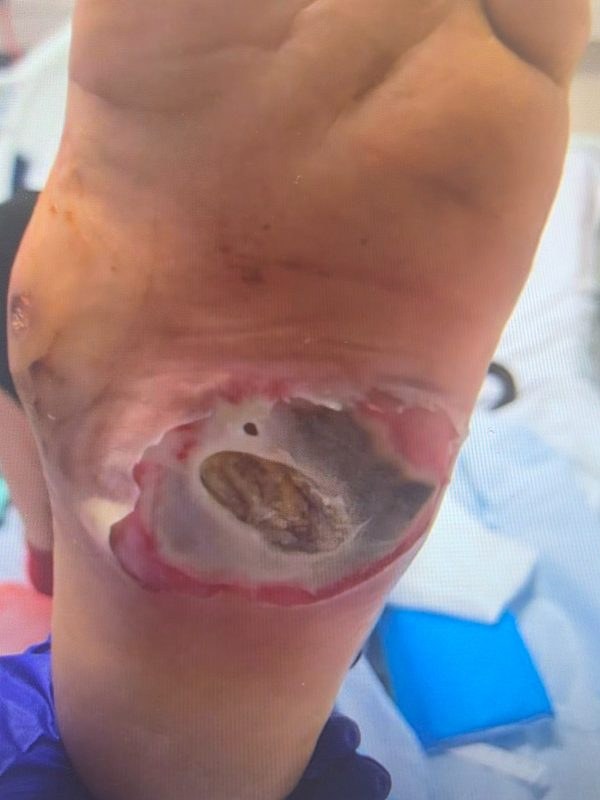
Diabetic foot ulcers
Most diabetic foot ulcers sit over a bony prominence or are caused by a tight tendon. Dressings treat the surface. The aim of treatment is to take away the pressure that caused the ulcer, so that it heals and stays healed.
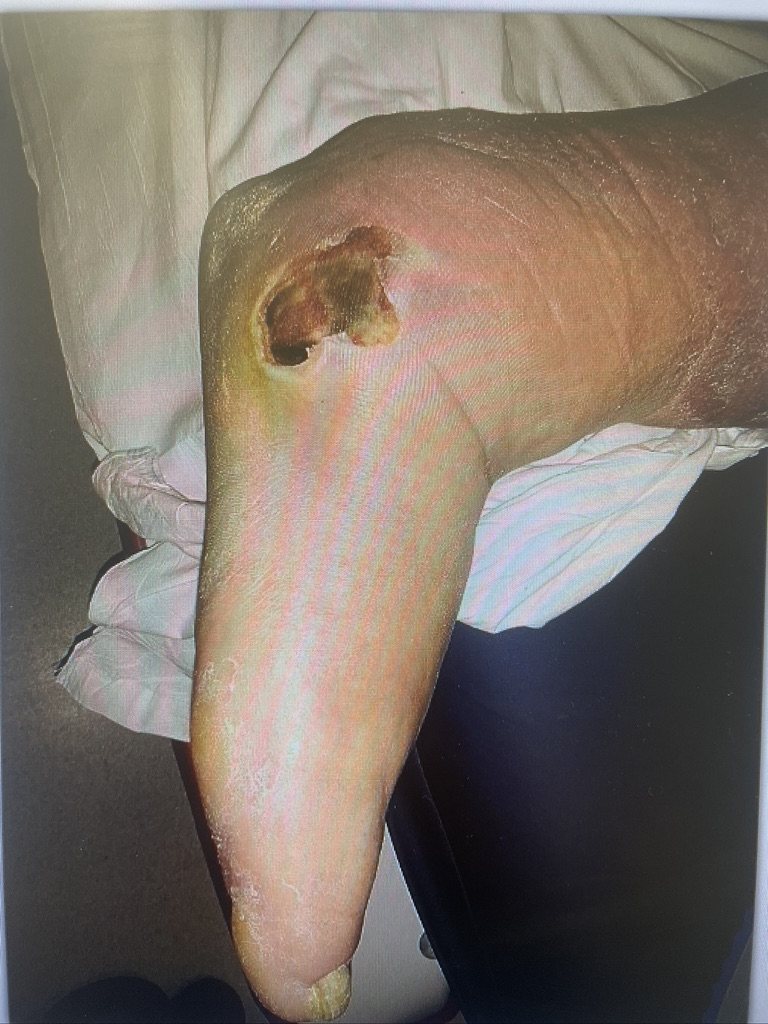
From first assessment to healed skin
Vascular assessment, an infection screen, and a total-contact cast or removable boot.
Debridement with deep tissue and bone samples, so that antibiotics match the organism rather than a surface swab.
Percutaneous Achilles lengthening for forefoot ulcers, needle plantar fascia release, and flexor tenotomy for toe-tip ulcers. Usually day-case procedures through very small incisions.
Removing a bony prominence, or full reconstruction when a Charcot deformity is driving the ulcer.
Flap cover with plastic surgeons where needed, then footwear and orthotics to keep the foot healed.
Evidence: in a randomised trial, adding Achilles lengthening to casting healed 100% of forefoot ulcers compared with 88% for casting alone, and reduced recurrence from 81% to 38% (Mueller et al., JBJS 2003).
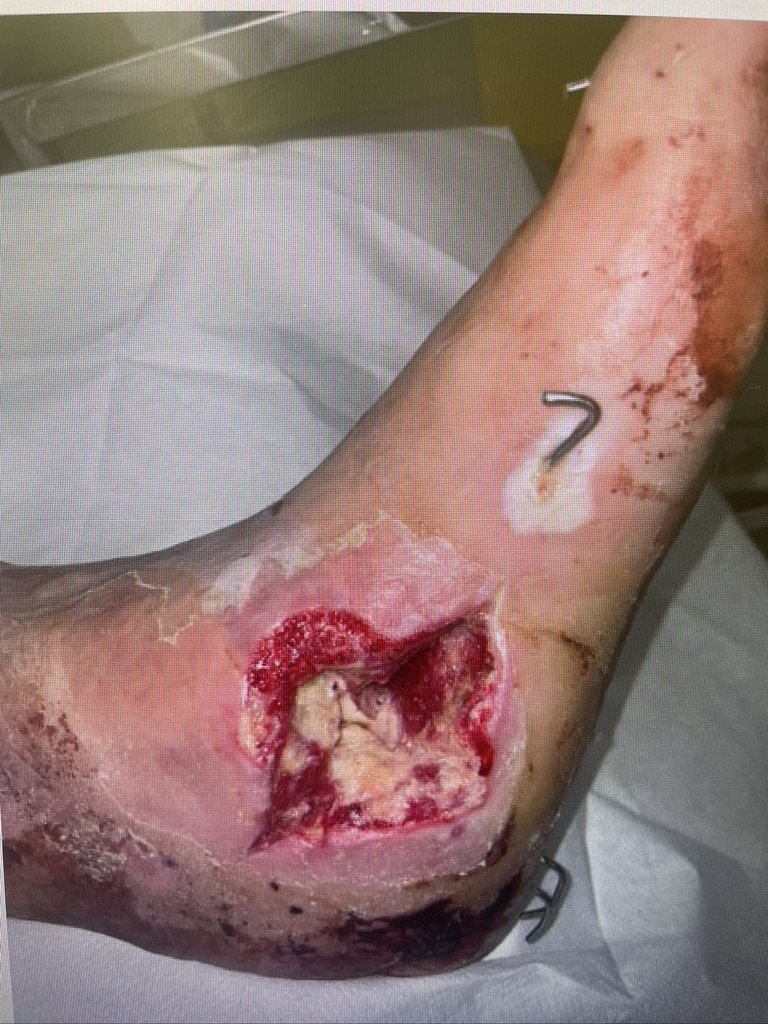
The deformity underneath
An ulcer that heals and then returns in the same place is usually sitting over bone that is the wrong shape. Correcting the deformity is what changes the pattern.
Where the circulation is the limiting factor and the ulcer will not heal, transverse tibial transport is sometimes an option. More on TTT.