Ankle fractures in diabetes
An ankle fracture in someone with diabetes behaves differently. Complication rates are higher, particularly with neuropathy, poor circulation or poorly controlled diabetes, and the fixation and the recovery plan have to account for that.
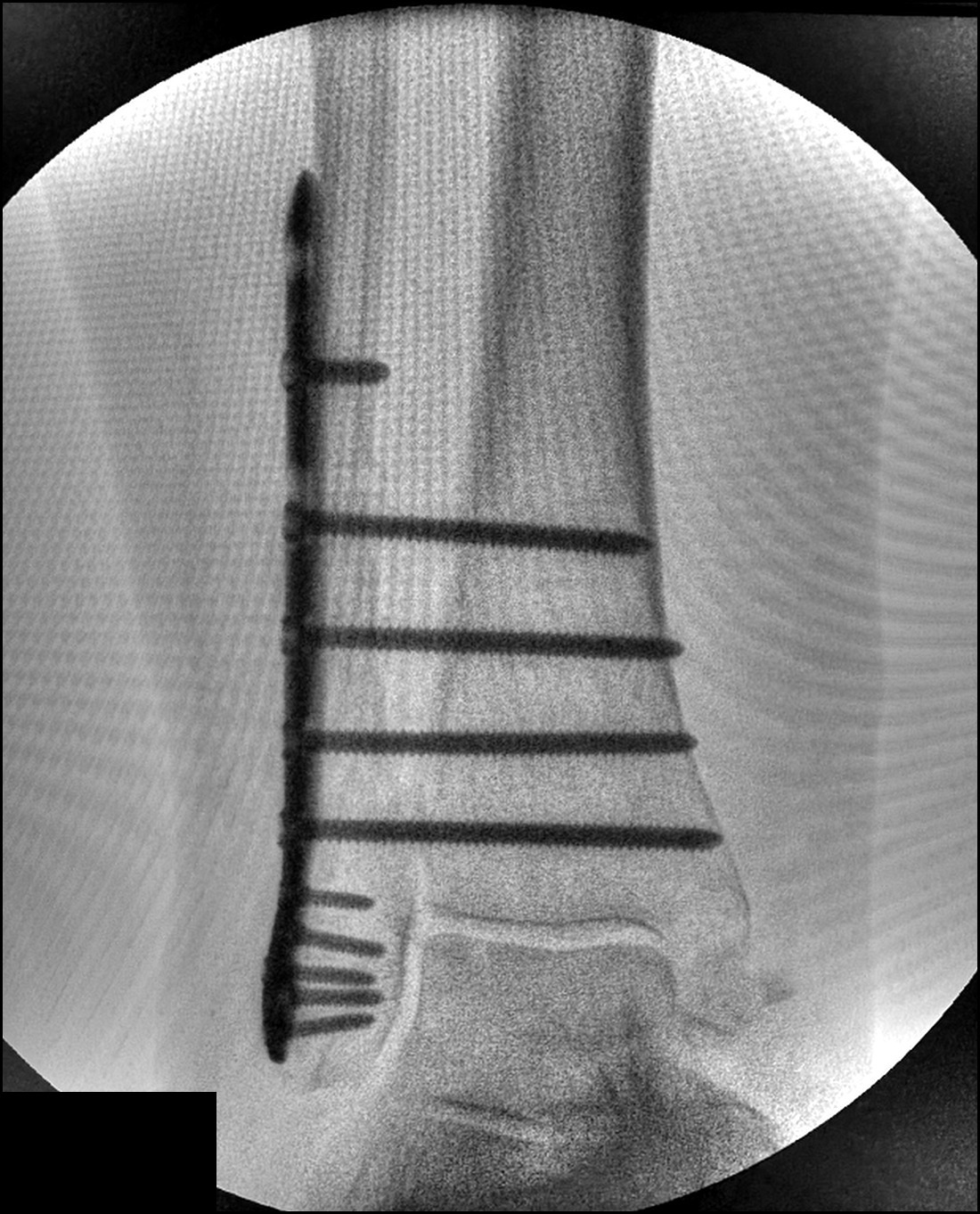
From our systematic review
With colleagues I reviewed 40 studies on ankle fractures in diabetes (Journal of Clinical Orthopaedics and Trauma, 2021).
Treatment in plaster alone did poorly. Stronger, supplementary fixation was associated with fewer complications and no extra risk from operating early.
In stable fractures without neuropathy, early weight-bearing gave results similar to people without diabetes. With neuropathy, protection is prolonged.
As a definitive treatment they carry high complication rates and are best kept to a minimum.
A neuropathic ankle can go on to develop Charcot change, so follow-up continues after the fracture has united. Charcot reconstruction.
I also run a separate practice for ankle and foot fractures in people without diabetes, at anklefracturesurgeon.co.uk.