Osteomyelitis in the diabetic foot
Bone infection under a diabetic ulcer is easy to miss, and easy to treat for longer than necessary. The aim is a firm diagnosis, antibiotics chosen for the organism that is actually there, and surgery only where it is needed.
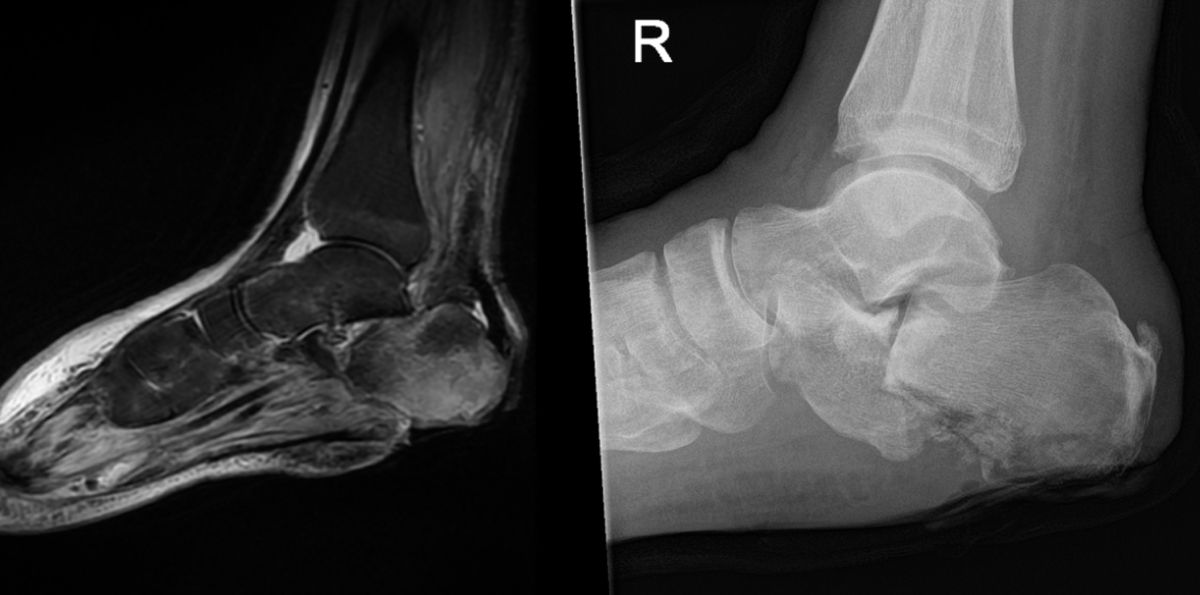
Getting the diagnosis right
Probing to bone at the base of an ulcer, plain X-rays, MRI and, where it will change treatment, an image-guided bone biopsy. Surface swabs are unreliable: in our own inpatient series, podiatry swabs matched the surgical bone sample in only two of nine pairs, which is why bone is sampled.
Antibiotics, surgery, or both
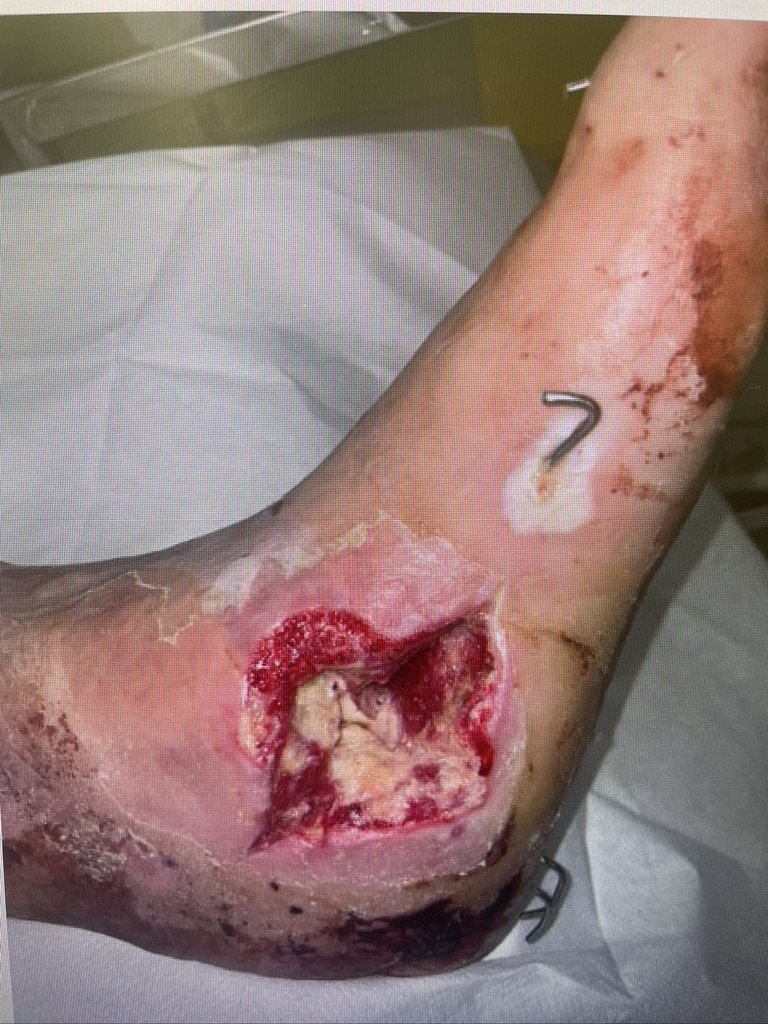
Many cases settle with targeted antibiotics. Where they do not, surgery ranges from drainage and limited bone resection to staged reconstruction with antibiotic-loaded bone graft substitute. Our 2024 review in the Journal of Clinical Orthopaedics and Trauma sets out this approach for surgeons.
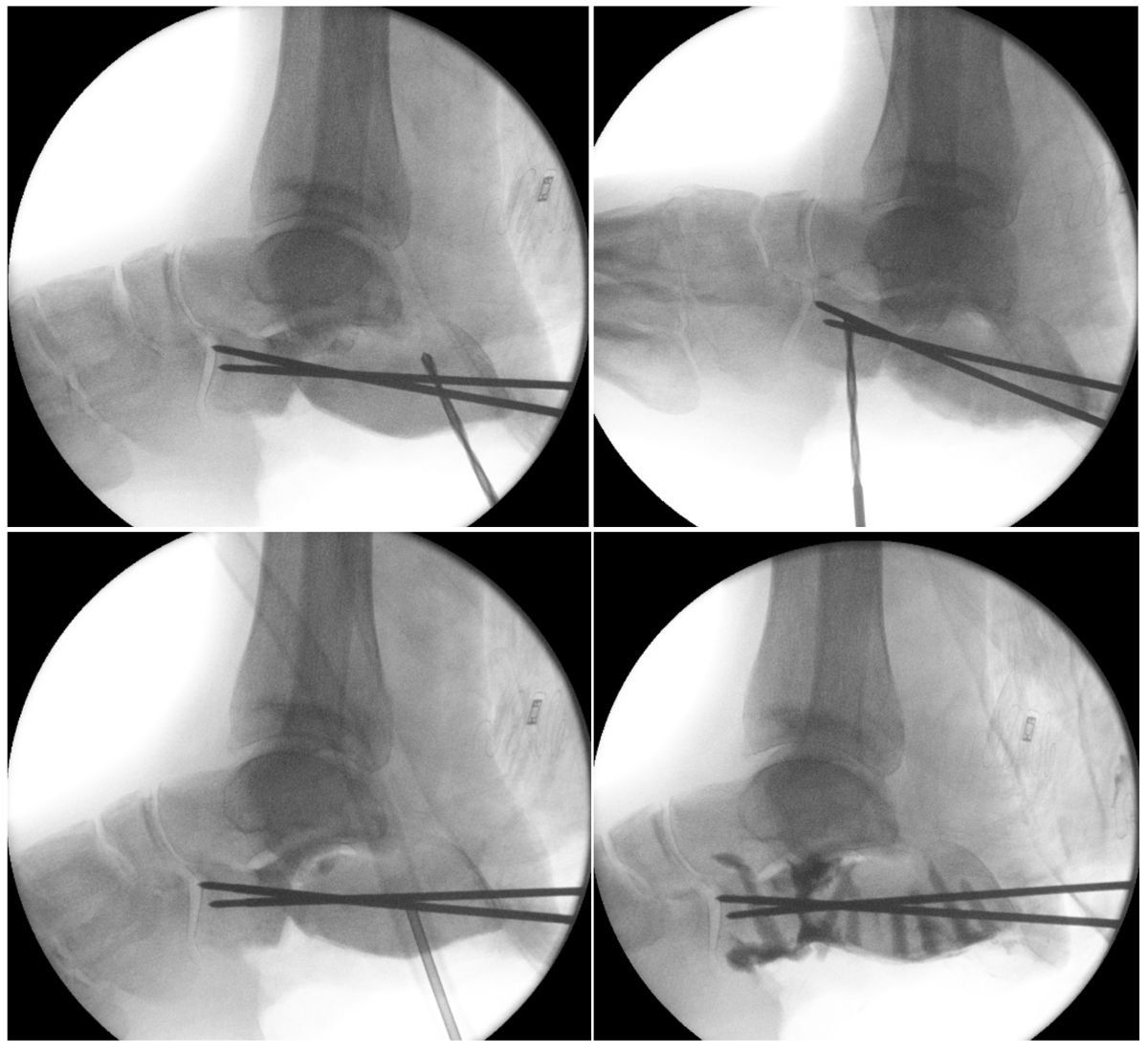
Bone graft substitute carrying antibiotic can be placed in the dead space left after resection.
In a deformed and infected foot, infection is treated first and the reconstruction follows once the wound and blood markers settle. See the two-stage pathway.
Glucose control, footwear, regular podiatry and prompt review of any new wound.